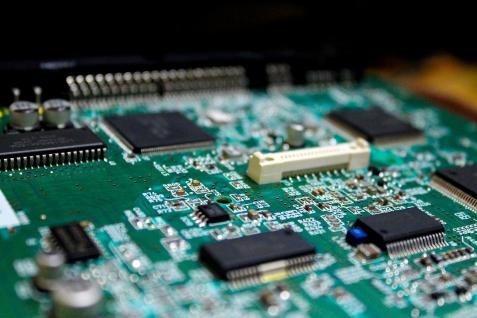
Honeywell and NXP Semiconductors announced at CES 2025 the expansion of their collaboration to develop advanced aviation technologies. The partnership aims to integrate Honeywell’s aerospace expertise with NXP’s computing systems to enhance operational efficiency, safety, and the development of autonomous flight systems.
The companies will focus on integrating NXP’s high-performance processors, including the i.MX 8 and S32N series, into Honeywell’s Anthem cockpit system. These processors will enable real-time AI-driven insights, enhance cybersecurity, and improve functional safety. The collaboration also aims to support the development of high-resolution cockpit displays and streamline the adoption of next-generation avionics.
The partnership will extend the lifecycle of aviation technologies while optimizing the transition to newer systems, which could deliver long-term value for aircraft manufacturers and operators.
Vertical Aerospace, a company developing electric vertical takeoff and landing (eVTOL) aircraft, is among the early adopters of the technology. Its piloted VX4 prototype is equipped with Honeywell Anthem, leveraging the platform’s capabilities to improve situational awareness and reduce pilot workload.
NXP’s processors are already utilized in Honeywell’s building management and safety systems, and this collaboration marks their application in aviation.
Representatives from both companies highlighted the potential of the partnership. Vimal Kapur, CEO of Honeywell, described the collaboration as a step forward in creating differentiated solutions for the aviation industry. Kurt Sievers, CEO of NXP Semiconductors, emphasized the importance of combining high-performance processing with AI and functional safety to advance autonomous flight capabilities.
Honeywell and NXP are showcasing their developments at CES 2025, including a demonstrator of the Honeywell Anthem avionics system.
The announcement builds on a partnership that began in 2024, initially focused on building automation and energy management systems.
On Date: