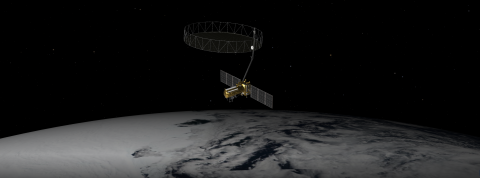
The NASA-ISRO Synthetic Aperture Radar (NISAR) satellite, developed jointly by NASA and the Indian Space Research Organisation (ISRO), is set to launch in the coming months. Designed to track Earth's surface changes, the satellite will utilize dual-band radar technology to provide detailed data on land deformation, ice sheet movements, and forest and wetland dynamics.
NISAR is equipped with two radar systems: an L-band radar with a 25-centimeter wavelength and an S-band radar with a 10-centimeter wavelength. These systems will enable the satellite to capture data on a wide range of surface features, from vegetation to geological structures, at a resolution of about one tennis-court-sized pixel. The satellite will monitor nearly all land and ice surfaces on Earth approximately once a week, offering insights into processes such as earthquakes, landslides, and glacier dynamics.
The data from NISAR will be processed and stored in a cloud-based system, allowing free access for researchers and other users worldwide. Applications range from scientific studies of ecosystems, cryosphere, and solid Earth processes to practical uses like monitoring soil moisture and water resources.
The project represents a collaboration formalized in 2014, with NASA providing the L-band radar, radar reflector antenna, and other components, while ISRO contributed the S-band radar, spacecraft bus, and launch services. The satellite assembly was completed in India, involving contributions from multiple ISRO centers, including the U R Rao Satellite Centre and the Space Applications Centre.
The mission marks the first hardware collaboration between NASA and ISRO for an Earth-observing satellite. Its launch vehicle is being provided by ISRO's Vikram Sarabhai Space Centre, with launch operations managed by the Satish Dhawan Space Centre. Satellite mission operations and data dissemination will be handled by ISRO's Telemetry, Tracking, and Command Network and the National Remote Sensing Centre.
The NISAR mission reflects a decade of international cooperation, aiming to enhance understanding of Earth's dynamic systems through innovative technology and global data accessibility.
On Date: