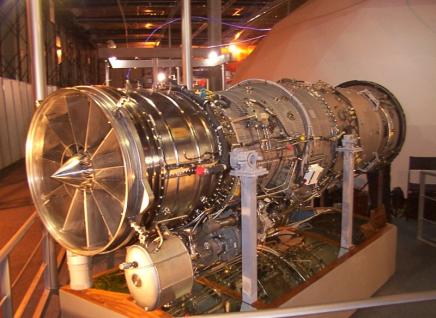
The Defence Research and Development Organisation (DRDO) has announced the clearance of the Kaveri engine for inflight testing. This development marks a significant milestone for India's aerospace sector, with the engine now set to be integrated into unmanned aerial vehicles (UAVs) such as the Ghatak stealth UCAV program.
The Kaveri engine, developed by the Gas Turbine Research Establishment (GTRE), was initially intended for the Tejas Light Combat Aircraft (LCA) but faced setbacks leading to its decertification. Efforts shifted to creating a dry version designed for UAVs. Following rigorous evaluations, including high-altitude simulations in Russia and ground trials in India, the engine has demonstrated reliability, thrust output, and operational stability, meeting performance requirements for inflight testing.
The dry version of the engine currently produces thrust in the range of 49-51 kN, suitable for UAV applications. Future upgrades, such as integrating an afterburner, aim to enhance thrust levels to 73-75 kN for broader applications.
The next phase involves mounting the engine on a flying test bed to evaluate its performance under varied flight conditions and its integration with aircraft systems. This stage will also test the engine's endurance, efficiency, and adaptability during extended inflight operations.
The Kaveri engine project, initiated in the late 1980s, reflects India's long-term goal of reducing reliance on foreign suppliers and advancing self-reliance in critical aerospace technologies. Further developments, including the planned Kaveri 2.0 version, aim to align the program with operational needs of the Indian Air Force.
This announcement was made by the GTRE under DRDO on December 23, 2024.
On Date: